Oooh kicktail might not agree with that geometry then. Worth playing around with though.
Just a little bit is fine, it’s a longer section than other motors have. There should be a grub screw in there avoid grinding into that, you wouldn’t want to go further than that anyway
That’s what I was thinking. The grub screw is at least 4-5 mm in so it should be doable.
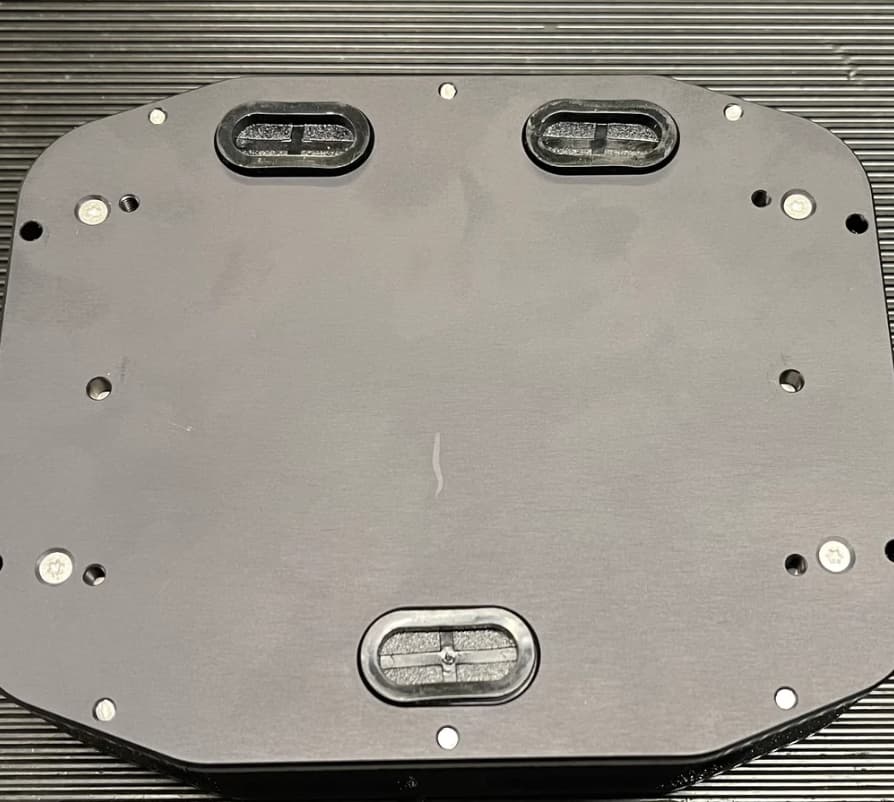
Here ya go 
4 Likes
Hell yeah thanks!
3 Likes
Hy guys!!
I have a question as i want to do a build from a lot of spare parts in my workshop.
The board should get me to the train and off train and should not be too long heavy or power consuming.
My plan is to use an old 6355 190kv motor with a 16t/30/32/34 gearing ration on abec11 flywheels. I dont need much speed just to get arround commuting (30kmh). I will switch the axle from the motor to a longer one to male a dual drive single motor setup.
Now my question is will this work with a 12000mah lipo back 4s2p running the motor on 80amps?
For esc ill use the spintend single ubox.
Should i go with a bigger motor for more breaking power? Or higher kv lower gearing?
Thx for all your input.
The question of whether you should go bigger depends on your requirements. Just be advised that even if the 6355 you’ve got can handle 80A, with 100mm wheels you’re looking at about 160N of thrust, give or take. At a more reasonable 65A, it’s 130N. If you’re a larger person, or if you have hills to climb, that may not be adequate. For a small person on flat ground at low speeds, it may be perfectly serviceable.
In your position, I would use the LiPos in series for 8s voltage, and max out the available gear reduction. For example, 100mm wheels with 10/36 gearing and 65 motor amps, provides a similar top speed and 230N thrust. Assuming that gearing is actually achievable, IDK.
3 Likes
Yepp youre right
I was considering this too as a fallback plan if the 4s setup is not working ill hook the lipos up into series and change the gear ratio.
As im printing the hubs/pulleys myself im pretty flexible with the gearing.
1 Like
thx for zour input btw forgot tht in the posting before 
4 Likes
Do most Esk8 hangers surround the boardside bushing like a deep cup washer?
I am having issues dialing in a rear hub motor truck whose hanger does not have any encapsulation of boardside bushing. It feels twitchy, with loads of bump steer, way worse during acceleration.
Dewedging had little effect.
I like my trucks loosey goosey, and my previous hub motor truck with smaller motors partially encapsulated boardside bushing, turned better, and was way more stable at speed, and suffered way less bump steer with same bushings at same tension.
Hey ya’ll,
Need some help with my cousin’s board. We were riding and his board started jerking and making a high pitched sound when braking. Kept happening so we did motor detection and it started doing what’s in the video.
Think motor is done for? It seems like something with the left motor.
1 Like
Hey guys, I’ve finally got my electronics complete, but i also have some 6s high discharge lipos and smart bms that id like to use as an extra pack. I’m only using a cheap dual esc, not a vesc, so i was wondering if its better for me to not bypass the bms and use for charging only like most say?
are you running them sensored?
If yes maybe try out to rund them without Hall sensor detection and see if the problem is still there
KR
3 Likes
Totally agree here, looks like a detection and sensor issue. The motor is losing position and not applying the torque at the right angle. Had a bad detection do something similar to this.
Redo the detection and try doing it from a pc with a serial connection if possible. I can’t get a good motor detection from Bluetooth personally and have had similar results from trying to get a good detection when i tried while out on a ride via the metr app and vesc app on ios
4 Likes
I’ve tried searching, but I can’t find much info on using Aramid/kevlar as the reinforcement material for enclosures instead of fiberglass/CF. From what I’m reading it sounds like it has the best impact and abrasion resistance of the three, which makes it sound like it would be the best material for enclosures, so why isn’t it used? I assume there is a good reason that I just don’t know about because I’m not very experienced in these things, but just reading things makes it sound like a good idea. It does sound like it’s harder to work with, so I probably won’t be trying it until I have more experience anyway, but I’m curious about it.
1 Like
Might just be that it’s not necessary. Fiberglass is cheap and doesn’t break often enough for people to push much past what carbon fiber can do. Higher strength composites, when cf enclosures are already expensive and light and strong enough at 3-4 layers, might just be a passion project if you really want to mess around with it.
Thermoformed and injection molded Abs, gf nylon, and kydex seem to be pretty long lived for the prebuilt manufacturers.
I don’t see any reason why not to try it ¯_(ツ)_/¯ i am not a composites expert by any stretch so definitely just a casual opinion
2 Likes
This.
Tbf i don’t even know why people fuck around with CF for enclosures. The faraday cage effect in itself is a big enough reason for me to nope out on it.
As for kevlar, it’s a bitch to work with as far as cutting/sanding goes, as it always leaves a ‘fluffy’ edge.
insert video of me trying and failing to break my fibreglass haero enclosure with a hammer
Adequately implemented fibreglass is totally good enough for enclosures. Its only when you start looking towards structural implementation (like radium chassis and integrated decks) and serious weight saving that you might start thinking about alternatives.
But as a hobbyist, fibreglass all the way. Fucking around with anything else is really only useful for the experience.
3 Likes
I agree with this. I haven’t even got round to using vacuum yet and the glass has been more than adequate. Carbon’s advantage is that it appeals more to the polished shoe brigade - bunch of cun+$.
I route out the bottoms of my decks flat and use epoxy to laminate thick triaxial to the underside, and some cloth on top for good measure. This more than makes up for lost strength, adds water resistance, and I can get more ground clearance by designing the enclosures lower profile. I like that the wood colours show through, it’s important to have wood. The epoxy seals the end grain well too, I like to rub it all around with my finger but I don’t know what why. As it starts to cure, heating it helps reduce the viscosity. Always mix in a wide shallow tray, as it will want to spontaneously cure and combust if the heat can’t dissipate.
I use polyester resin for the enclosures. It dissolves the binder in chop strand, and is 25% the cost of epoxy. Most chop strand mats aren’t compatible with epoxy as the binder won’t dissolve, I’m told. I always use epoxy for laminating to timber though.
I use fine cloth mat for the intricate parts of the mould or enclosure, and chopstrand in between layers for the bulk as it’s less likely to form bubbles without being clamped, although when I sort my life out I will start vacuum pressing it. Clamping parts with PE film and foam to spread loads evenly can help, but this gets stressful quickly.
So far I’ve made three plugs with urethane building insulation foam, finishing the shape with glass and bog. Clone that to make a mould, chop the mould into sections and add alloy dividers and glass those in too. My first enclosure was a single tub, but this was bollocks and I will only make compartmental enclosures now.
With compartmental, battery building is more work, enclosure building is more work, but as least the deck flexs like it should. I absolutely hated the double stack single tub I first made for my switchblade. The only thing I found the single compartment enclosure was good for has been filling with beers and ice.
I lost count of how many boat building videos I had to watch before I was confident to start making my own glass enclosures.
4 Likes
Also, CF is conductive… That’s the main reason I don’t like it for enclosures.
4 Likes